Textbook Corporation Committed to Providing Quality Books in Line with the New Education Policy
Raipur |
03-Jan-2026
229
.jpg "Textbook Corporation Committed to Providing Quality Books in Line with the New Education Policy")
TNINS
Textbook Printing to Strictly Follow NCERT Standards
Raipur : The Chhattisgarh Textbook Corporation has clarified that all decisions related to the printing of textbooks for the academic session 2026–27 are being taken strictly in accordance with the New National Education Policy, standards prescribed by NCERT, and the directions issued by the State Government and SCERT Chhattisgarh.
The Corporation stated that the curriculum for Classes 1 to 8 is entirely based on the NCERT. As per the agreement between NCERT and SCERT, there is a provision that internal pages of textbooks are to be printed on 80 GSM paper. The agreement further specifies that, to ensure production quality, long-term durability and readability, textbooks must use 80 GSM text paper and 220 GSM cover paper. Accordingly, 80 GSM paper is being used for Classes 1 to 8, while 70 GSM paper is being used for Classes 9 and 10. The Corporation emphasised that these decisions are based on contractual provisions and academic standards, and not taken independently at the corporation level.
Officials informed that in line with the New Education Policy, the number of subjects for Classes 1 to 8 has been increased. While 134 subjects were printed in the previous academic session, textbooks for 144 subjects are proposed for the 2026–27 session. The increase in subjects in Classes 4 and 7 has been implemented as per decisions taken by the State Government and SCERT. Due to this expansion, the demand for paper has naturally increased, but the process has been carried out in a planned manner and with the necessary approvals.
The Corporation also clarified that during the previous academic year, approximately 2.65 crore textbooks were printed using nearly 11,000 metric tonnes of paper. For the upcoming academic session 2026–27, the estimated paper requirement is expected to remain at a similar level. Hence, claims suggesting an abnormal or excessive increase in paper consumption are factually incorrect.
Dismissing reports that students’ school bag weight has increased by 14 per cent, the Corporation stated that such claims are misleading. Assessing bag weight based on paper GSM does not accurately reflect the actual situation. Various academic measures such as digital learning, phased distribution of learning material, etc, have been introduced and implemented to regulate the weight of school bags. As a result, concerns regarding a significant increase in school bag weight are unfounded.
To ensure the production of high-quality textbooks, stringent conditions have been incorporated into the tender process. Bidders are required to submit clearance certificates issued by authorised GST officials for paper mills, along with proof of supplying a minimum of 42,000 metric tonnes of printing paper. These provisions ensure that only experienced and capable firms participate in the supply process, thereby guaranteeing the quality of textbooks for students.
The Chhattisgarh Textbook Corporation reiterated that all decisions related to textbook printing for the academic session 2026–27 are being taken strictly in accordance with the New National Education Policy, NCERT standards and the directions of the State Government and SCERT. It was informed that the curriculum for Classes 1 to 8 is based on the NCERT and that, as per the agreement signed on 15 October 2025 between NCERT, New Delhi and SCERT, Raipur, there is a clear provision for the use of 80 GSM paper for internal pages and 220 GSM cover paper. Clause 8 of the agreement further mandates that production quality, printing, illustrations and layout of textbooks must strictly adhere to NCERT standards.
The Corporation further explained that the procurement of paper and printing work for the 2026–27 academic session is being undertaken only after approval by its Executive Committee. This committee comprises representatives from the Finance Department, Tribal Development Department, School Education, Samagra Shiksha, SCERT, and the Government Printing Press, ensuring a transparent, multi-departmental, and accountable decision-making mechanism.
Providing details of the previous session, the Corporation stated that in the 2025–26 academic year, approximately 2.65 crore free textbooks were printed using 9,300 metric tonnes of reel paper, along with the utilisation of around 1,700 metric tonnes of paper carried forward from earlier stocks. Based on this assessment, the procurement of approximately 11,000 metric tonnes of 70- and 80-gsm paper for the 2026–27 session is being conducted through an open tender process.
The Corporation reiterated that all academic decisions related to curriculum design and subject inclusion are taken by SCERT and the State Government. The role of the Chhattisgarh Textbook Corporation is limited to printing and distribution of approved textbooks. Claims of unnecessary increases in paper usage, expenditure or school bag weight have been described as exaggerated and not reflective of actual facts.
Parents and teachers have been urged to rely on verified official information and avoid being misled by unsubstantiated reports. Officials stressed that students’ interests remain paramount and that the process of providing quality textbooks in line with the New Education Policy is being carried out with complete transparency and strict adherence to prescribed norms.
.jpg "Commendable Initiative of Chhattisgarh Government Under Mukhyamantri Kanya Vivah Yojana")
.jpg "Global Chhattisgarh Diaspora to Converge in Raipur on March 27–28")
.jpg "Bastar Pandum 2026: A Grand Confluence of Tribal Heritage and Living Traditions")
.jpg "Silver Jubilee Medal to Become an Enduring Symbol of the Police’s Indomitable Courage, Valour and Sacrifice in Safeguarding Peace and Security in the State: Chief Minister Shri Sai")
.jpg "President Smt. Droupadi Murmu to visit Jagdalpur on February 7")
.jpg "Healthcare Reaches Deep Interiors as 14 Patients Regain Vision in Sukma")
.jpg "Jandarshan to Be Held at Chief Minister’s Residence on Thursday, January 8")
.jpg "DSIR Sanctions STREE Project to NIT Raipur to Empower Rural Women in Dhamtari District")


.jpg "Annadata’s Honour Is the Identity of Our Government: Chief Minister Shri Sai Announces One-Time Payment of Differential Price of Paddy Before Holi")
.jpg "President Smt. Droupadi Murmu to Inaugurate ‘Bastar Pandum–2026’ on February 7")
.jpg "Dozens of journalists honored with South Asian Hero Award 2026")
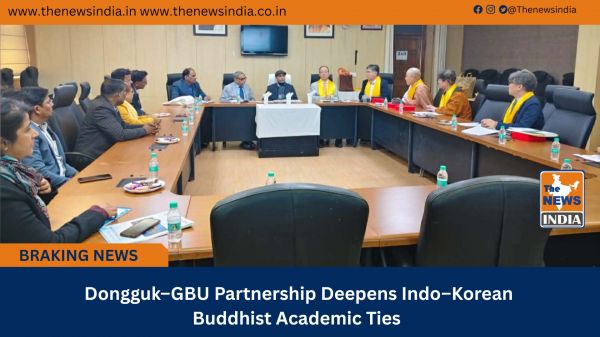
.jpg "Hundreds of monks will attend Republic Day of India")
.jpg "Over 22,000 Visitors Flock to Chhattisgarh Pavilion on Opening Day at World Expo 2025, Osaka (Japan)")
.jpg "Akshay Kumar’s Show Witnesses a Power-Packed Reunion of Gulshan Grover, Shakti Kapoor and Chunky Panday")
.jpg "“HAQ” Trailer Sparks Applause — Emraan Hashmi & Yami Gautam’s Bold Courtroom Drama Wins the Internet!")
.jpg "India will host the first Blind Women's T20 World Cup in 2025")
.png "Imane Khelif to take legal action against reports claiming she is a man, says IOC")
.png "\"Jasprit Bumrah makes a strong statement: 'The series will not be one-sided'\"")
.jpg "Walnuts: A treasure trove of health, a gift full of nutrition")
.png "Walking Pneumonia On The Rise As Delhi's Toxic Air Quality Know All About This Respiratory Condition")
.png "Drinking Clove water on an empty stomach in the morning can protect you from THESE diseases this winter")
.jpg "Gold prices fall, silver also becomes cheaper")
.png "Ola Electric cuts 500 jobs across verticals")
.png "\"Hindenburg report reduces market value of Adani companies by Rs 7 lakh crore\"")



.png "New Telecom Cyber Security Rules Notified, Govt Can Now Access Traffic Data, But Not Message Content Details")
.png "Samsung Galaxy S25 Plus, Samsung Galaxy S25 Ultra Appear On BIS, India Launch Might Happen Soon")